A Sindhi mother from a Kailash Colony once told me something that stayed with me long after the community matrimonial search. She said the moment she knew she was speaking to the right agency was when the relationship manager asked which part of Sindh her husband’s family was originally from. Nobody outside the community ever thinks to ask that. Within it, there’s always a question that reveals whether the person asking understands that Sindhi families from Hyderabad, Karachi, Sukkur and Shikarpur brought different cultural textures with them when they came to India after partition, and that these textures still matter in how families assess compatibility seventy-five years later.
That question only took about two seconds to ask. It demonstrated more genuine community knowledge than twenty minutes of general conversation about the agency’s experience and success rates would have.
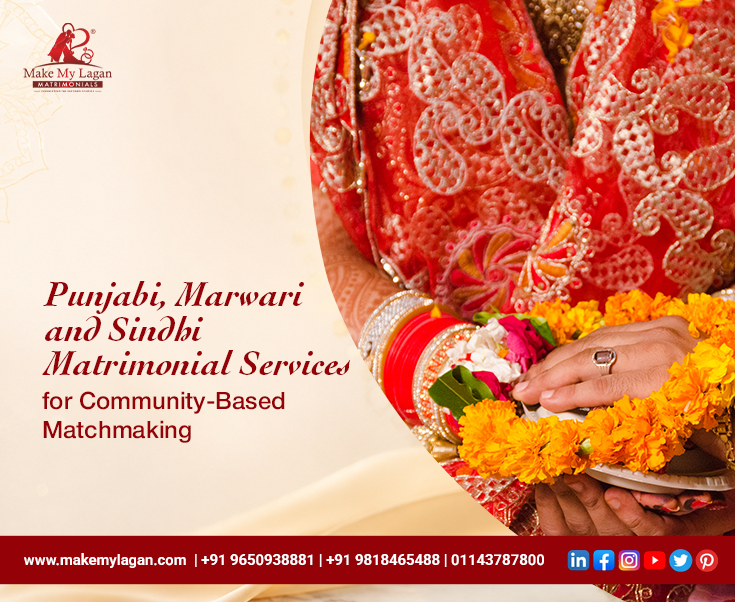
What Makes Punjabi Matrimonial Matching Genuinely Specific
The Punjabi community in Delhi is large enough to look from the outside like a single category and specific enough from the inside to contain distinctions that matter considerably in a matrimonial search. The gotra system is the non-negotiable foundation. Gotra compatibility is not a preference, it is a requirement in traditional Punjabi Hindu families and any agency doing Punjabi matrimonial work that doesn’t apply gotra matching from the first filter is demonstrating either ignorance of the community or carelessness about the requirements. The specific gotras that are incompatible with each other need to be known and applied correctly, not approximated.
Beyond gotra, the regional origin distinction matters in specific family contexts. Families with roots in Rawalpindi, Lahore, Multan and other districts of pre-partition West Punjab have cultural affiliations that still carry meaning for the families who hold them. Describing all of these as simply Punjabi and treating them as equivalent in the matching process misses something real.
The Arora and Khatri communities within Punjabi Hindus have their own specific matrimonial considerations. Sikh Punjabi families have considerations around Sikh practice, gurudwara affiliation in some families and the question of whether both families observe the same relationship with religious practice. These are things a genuine Punjabi matrimonial service knows and applies.
What Marwari Matrimonial Services Require
The Marwari community has perhaps the most clearly defined matrimonial framework of any major trading community in India and the agencies that serve it well understand several things simultaneously.
Gotra restrictions in Marwari communities are extensive. The same gotra cannot marry within several related gotras and the restrictions are more complex than in many other communities. A Marwari matrimonial service that doesn’t know these restrictions in detail will present introductions that are immediately unacceptable to one or both families, which wastes time and creates a poor impression of the service.
Family reputation and business standing carry weight in Marwari matrimonial matching that goes beyond what the profile document captures. The matchmaker who knows the Marwari community’s social geography in Delhi, which families are known and respected within the business community, which businesses are established versus recently successful, the reputation dynamics that aren’t publicly documented, is providing something that a database search cannot.
Sub-community distinctions within Marwari matter in specific family contexts. Families may have specific preferences around Agarwal, Maheshwari, Khandelwal or other Marwari sub-communities that need to be understood and applied rather than overridden in the matching process.
What Sindhi Matrimonial Services Need to Understand
The Sindhi community’s specific geographic reality, a community distributed across India and internationally since partition, shapes the Sindhi matrimonial search in ways that make geographic breadth more important here than in communities with stronger regional concentration. A Sindhi matrimonial service that limits its active search to Delhi is limiting itself more than a Punjabi or Marwari service that does the same thing.
The Sindhi community’s strong orientation toward business and entrepreneurship creates specific expectations around professional profiles that differ from communities where government service or salaried employment is equally valued. A candidate’s business trajectory, not just their current designation but whether they’re building something, what the business’s standing is, what the family’s professional reputation looks like, carries weight in Sindhi matrimonial assessment.
The Sindhi community’s emphasis on family cohesion and the specific texture of what a good Sindhi family life looks like, the hospitality culture, the family gathering expectations, the relationship with extended family, are things that a Sindhi matrimonial service should be assessing and matching against, not just using as descriptors in the profile.
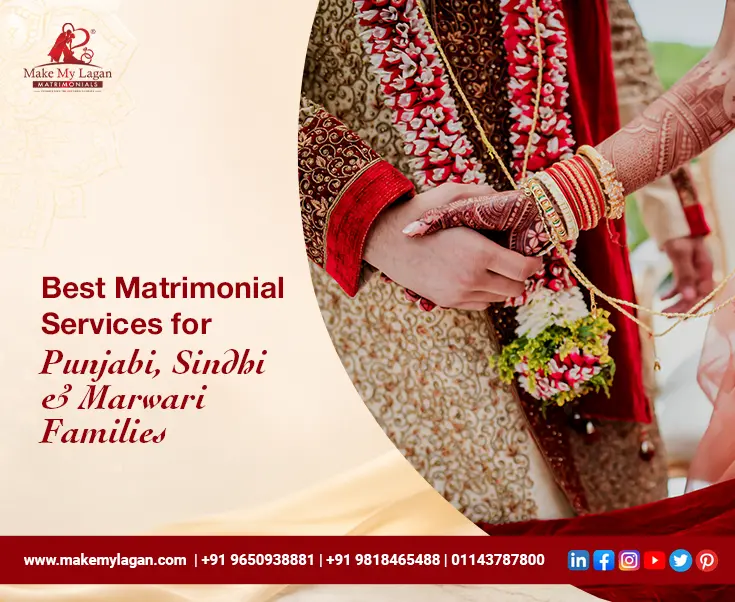
Make My Lagan serves Punjabi, Sindhi and Marwari families through dedicated relationship managers with specific community expertise in each, applying the community-specific matching criteria, gotra restrictions, family background assessment, sub-community considerations and lifestyle compatibility, from the beginning of every search.
FAQs
- What gotra considerations apply in Punjabi matrimonial matching?
Ans. Gotra compatibility is a fundamental requirement in traditional Punjabi Hindu families. The matching process must apply gotra restrictions correctly from the first filter. Agencies that don’t know the specific gotra restrictions in Punjabi communities will make introductions that are immediately unacceptable.
- How does Marwari matrimonial matching differ from Punjabi matching?
Ans. Marwari communities have more extensive gotra restrictions and stronger emphasis on family reputation and business standing within the community. Family background assessment goes beyond documentary verification to include community reputation knowledge that requires genuine Marwari community engagement.
- Why is geographic breadth important in Sindhi matrimonial services?
Ans. The Sindhi community has been distributed across India and internationally since partition. Limiting the search to a single city misses a significant proportion of the eligible Sindhi matrimonial pool. A Sindhi matrimonial service worth using has active registrations across multiple cities.
- How does community knowledge differ from general matrimonial experience?
Ans. Community knowledge means understanding the specific considerations, gotra restrictions, sub-community distinctions, regional origin significance, community-specific family background expectations, that apply within that community. General matrimonial experience means knowing how to manage a matrimonial search without necessarily understanding these community-specific dimensions.
- Does Make My Lagan serve all three communities with dedicated expertise?
Ans. Yes, separate relationship managers with specific community expertise serve Punjabi, Sindhi and Marwari families, applying the community-specific matching criteria appropriate to each.